
Publications

Academic publications sorted by year.

Featured

Cover for Splice site m6A methylation prevents binding of U2AF35 to inhibit RNA splicing

Splice site m6A methylation prevents binding of U2AF35 to inhibit RNA splicing

Mateusz Mendel, Kamila Delaney, Radha Raman Pandey, Kuan-Ming Chen, Joanna M Wenda, Cathrine Broberg Vågbø, Florian A Steiner, David Homolka, Ramesh S Pillai

Cell, 2021

Abstract

The N6-methyladenosine (m6A) RNA modification is used widely to alter the fate of mRNAs. Here we demonstrate that the C. elegans writer METT-10 (the ortholog of mouse METTL16) deposits an m6A mark on the 3' splice site (AG) of the S-adenosylmethionine (SAM) synthetase pre-mRNA, which inhibits its proper splicing and protein production. The mechanism is triggered by a rich diet and acts as an m6A-mediated switch to stop SAM production and regulate its homeostasis. Although the mammalian SAM synthetase pre-mRNA is not regulated via this mechanism, we show that splicing inhibition by 3' splice site m6A is conserved in mammals. The modification functions by physically preventing the essential splicing factor U2AF35 from recognizing the 3' splice site. We propose that use of splice-site m6A is an ancient mechanism for splicing regulation.
PDFDOI

Methylation of structured RNA by the m6A writer METTL16 is essential for mouse embryonic development

Mateusz Mendel, Kuan-Ming Chen, David Homolka, Pascal Gos, Radha Raman Pandey, Anne A McCarthy, Ramesh S Pillai

Molecular Cell, 2018

Abstract

Internal modification of RNAs with N6-methyladenosine (m6A) is a highly conserved means of gene expression control. While the METTL3/METTL14 heterodimer adds this mark on thousands of transcripts in a single-stranded context, the substrate requirements and physiological roles of the second m6A writer METTL16 remain unknown. Here we describe the crystal structure of human METTL16 to reveal a methyltransferase domain furnished with an extra N-terminal module, which together form a deep-cut groove that is essential for RNA binding. When presented with a random pool of RNAs, METTL16 selects for methylation-structured RNAs where the critical adenosine is present in a bulge. Mouse 16-cell embryos lacking Mettl16 display reduced mRNA levels of its methylation target, the SAM synthetase Mat2a. The consequence is massive transcriptome dysregulation in ∼64-cell blastocysts that are unfit for further development. This highlights the role of an m6A RNA methyltransferase in facilitating early development via regulation of SAM availability.

DOI

Regulation of m6A transcripts by the 3’→5’ RNA helicase YTHDC2 is essential for a successful meiotic program in the mammalian germline

Magdalena Natalia Wojtas, Radha Raman Pandey, Mateusz Mendel, David Homolka, Ravi Sachidanandam, Ramesh S Pillai

Molecular Cell, 2017

Abstract

N6-methyladenosine (m6A) is an essential internal RNA modification that is critical for gene expression control in most organisms. Proteins with a YTH domain recognize m6A marks and are mediators of molecular functions like RNA splicing, mRNA decay, and translation control. Here we demonstrate that YTH domain-containing 2 (YTHDC2) is an m6A reader that is essential for male and female fertility in mice. High-throughput mapping of the m6A transcriptome and expression analysis in the Yhtdc2 mutant testes reveal an upregulation of m6A-enriched transcripts. Our biochemical studies indicate that YTHDC2 is an RNA-induced ATPase with a 3'→5' RNA helicase activity. Furthermore, YTHDC2 recruits the 5'→3' exoribonuclease XRN1 via Ankyrin repeats that are inserted in between the RecA modules of the RNA helicase domain. Our studies reveal a role for YTHDC2 in modulating the levels of m6A-modified germline transcripts to maintain a gene expression program that is conducive for progression through meiosis.

DOI

All

Cover for m6A methylation inhibits recruitment of the Dand5 3’ UTR to the left–right determinant Bicc1

m6A methylation inhibits recruitment of the Dand5 3’ UTR to the left–right determinant Bicc1

Benjamin Rothé, Mateusz Mendel, Simon Fortier, Daniel B Constam

RNA, 2025

Abstract

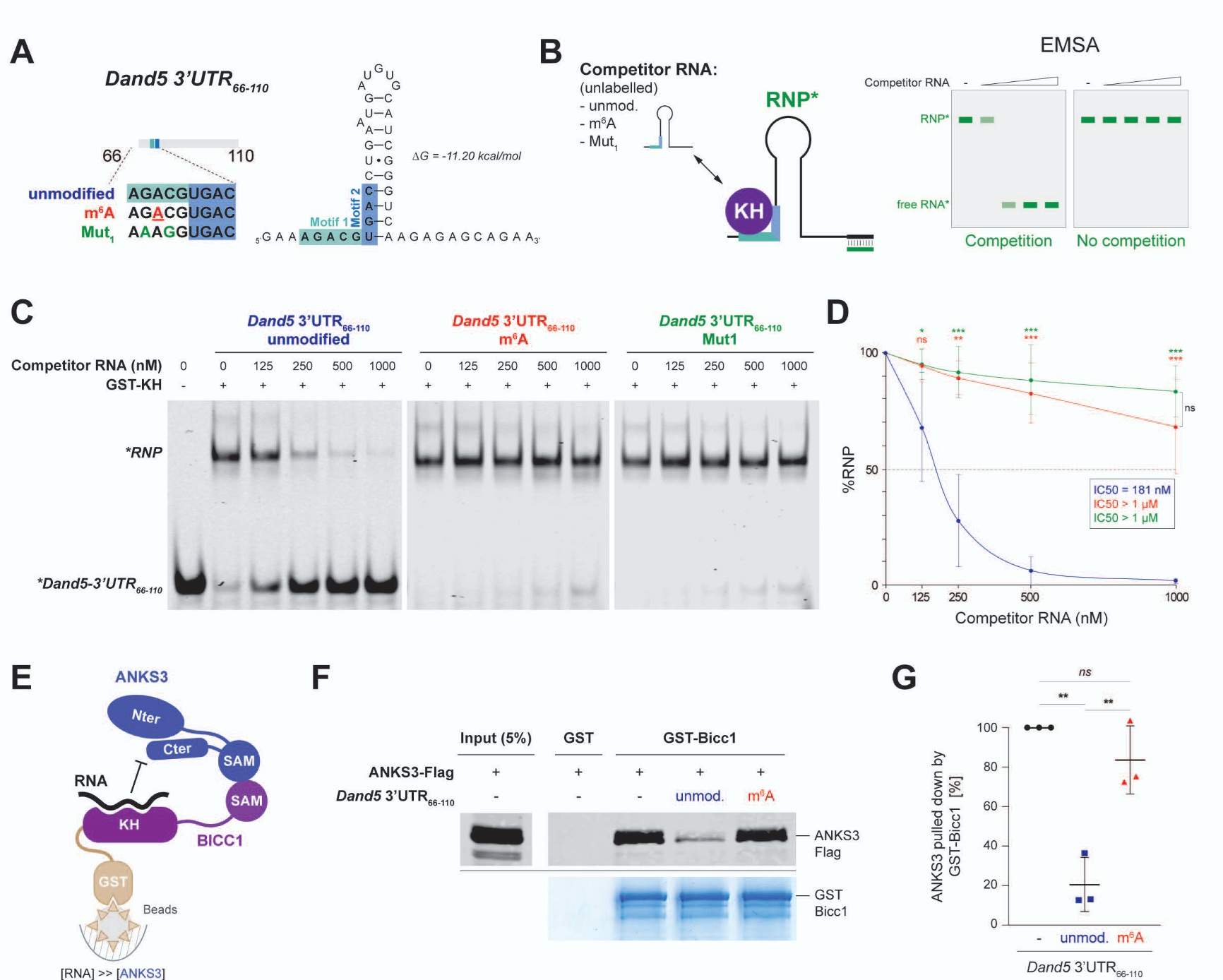
In vertebrates, left-right (LR) asymmetry is specified by asymmetric decay of Dand5 messenger RNA (mRNA) mediated by the recruitment of the BicC family RNA binding protein 1 (Bicc1). Besides regulating organ laterality, Bicc1 is required to prevent cystic dilations in renal tubules and in pancreatic and bile ducts. However, validated target mRNAs are sparse in number, and how their binding to Bicc1 is regulated remains poorly understood. Bicc1 recruitment to Dand5 transcripts requires a conserved AGACGUGAC motif in the 3’UTR. Here, we report an N6-methyladenosine (m6A) in this sequence that disrupts binding to Bicc1 K homology (KH) domains in vitro, in stark contrast to IGF2BPs and FMR1, where m6A promotes RNA recognition by KH domains. We discuss the possible implications of this finding for LR axis formation and for a related role of Bicc1 in regulating specific target mRNAs in the kidney.

PDFDOI

SARM1 base-exchange inhibitors induce SARM1 activation and neurodegeneration at low doses

Anisha Mani, Mateusz Mendel, Paul Westwood, Claudia Bonardi, Wiebke Saal, Andreas Topp, Matthew Bilyard

npj Drug Discovery, 2025

Abstract

SARM1 has emerged as a promising therapeutic target in neurology due to its central role in axonal degeneration and its amenability to different modes of small molecule inhibition. One chemical approach to modulate SARM1 involves orthosteric inhibition via a SARM1-mediated base-exchange reaction between a small molecule and nicotinamide adenine dinucleotide (NAD+), the substrate of SARM1, to generate the active inhibitor. Here, we report that subinhibitory concentrations of SARM1 base-exchange inhibitors (BEIs) paradoxically increase SARM1 activity and worsen SARM1-induced cell death and neuronal damage in vitro. Low dose administration of RO-7529, a SARM1 BEI, exacerbated experimental autoimmune encephalomyelitis (EAE)-induced neurodegeneration in vivo. Our data highlight a unique pharmacological feature of SARM1 BEIs that may limit their therapeutic application in disorders associated with SARM1 activation and axonal degeneration.

DOI

Discovery of a potent SARM1 base-exchange inhibitor with in vivo efficacy

Maude Giroud, Bernd Kuhn, Sandra Steiner, Paul Westwood, Mateusz Mendel, Anisha Mani, Emmanuel Pinard, Wolfgang Haap, Uwe Grether, Paola Caramenti, Didier Rombach, Claudio Zambaldo, Martin Ritter, Philipp Schmid, Claire Gasser, Nina Aregger, Nora Séchet, Andreas Topp, Matthew Bilyard, Alexia Malnight-Alvarez, Inken Plitzko, Manuel Hilbert, Sissy Kalayil, Dominique Burger, Claudia Bonardi, Wiebke Saal, Achi Haider, Matthias Beat Wittwer, Alessandro Brigo, Jörg Benz, James Keaney

Journal of Medicinal Chemistry, 2025

Abstract

Sterile alpha and TIR Motif Containing 1 (SARM1) is a nicotinamide adenine dinucleotide (NAD+) hydrolase that plays a central role in programmed axonal degeneration. Axonal degeneration has been linked to neurodegenerative and neurological disorders such as multiple sclerosis, amyotrophic lateral sclerosis, Parkinson's disease, and peripheral neuropathies. Therefore, developing potent and selective SARM1 inhibitors could be an effective strategy to treat these disorders. We present herein the structure-guided discovery of two novel SARM1 inhibitors, 7 and 35. Compounds 7 and 35 are potent inhibitors across assays and possess favorable ADMET properties. When tested in vivo, compound 7 showed efficacy after oral dosing in a mouse model of peripheral nerve injury by decreasing plasma neurofilament light (NfL) levels at 50 mg/kg compared with vehicle-treated control mice, holding promise for the treatment of neurodegenerative and neurological disorders.

DOI

Essential roles of RNA cap-proximal ribose methylation in mammalian embryonic development and fertility

Michaela Dohnalkova, Kyrylo Krasnykov, Mateusz Mendel, Lingyun Li, Olesya Panasenko, Fabienne Fleury-Olela, Cathrine Broberg Vågbø, David Homolka, Ramesh S Pillai

Cell Reports, 2023

Abstract

Eukaryotic RNA pol II transcripts are capped at the 5' end by the methylated guanosine (m7G) moiety. In higher eukaryotes, CMTR1 and CMTR2 catalyze cap-proximal ribose methylations on the first (cap1) and second (cap2) nucleotides, respectively. These modifications mark RNAs as “self,” blocking the activation of the innate immune response pathway. Here, we show that loss of mouse Cmtr1 or Cmtr2 leads to embryonic lethality, with non-overlapping sets of transcripts being misregulated, but without activation of the interferon pathway. In contrast, Cmtr1 mutant adult mouse livers exhibit chronic activation of the interferon pathway, with multiple interferon-stimulated genes being expressed. Conditional deletion of Cmtr1 in the germline leads to infertility, while global translation is unaffected in the Cmtr1 mutant mouse liver and human cells. Thus, mammalian cap1 and cap2 modifications have essential roles in gene regulation beyond their role in helping cellular transcripts to evade the innate immune system.

DOI

The XRN1-regulated RNA helicase activity of YTHDC2 ensures mouse fertility independently of m6A recognition

Lingyun Li, Kyrylo Krasnykov, David Homolka, Pascal Gos, Mateusz Mendel, Richard J Fish, Radha Raman Pandey, Ramesh S Pillai

Molecular Cell, 2022

Abstract

The functional consequence of N6-methyladenosine (m6A) RNA modification is mediated by “reader” proteins of the YTH family. YTH domain-containing 2 (YTHDC2) is essential for mammalian fertility, but its molecular function is poorly understood. Here, we identify U-rich motifs as binding sites of YTHDC2 on 3' UTRs of mouse testicular RNA targets. Although its YTH domain is an m6A-binder in vitro, the YTH point mutant mice are fertile. Significantly, the loss of its 3'→5' RNA helicase activity causes mouse infertility, with the catalytic-dead mutation being dominant negative. Biochemical studies reveal that the weak helicase activity of YTHDC2 is enhanced by its interaction with the 5'→3' exoribonuclease XRN1. Single-cell transcriptomics indicate that Ythdc2 mutant mitotic germ cells transition into meiosis but accumulate a transcriptome with mixed mitotic/meiotic identity that fail to progress further into meiosis. Finally, our demonstration that ythdc2 mutant zebrafish are infertile highlights its conserved role in animal germ cell development.

DOI
Cover for Splice site m6A methylation prevents binding of U2AF35 to inhibit RNA splicing

Splice site m6A methylation prevents binding of U2AF35 to inhibit RNA splicing

Mateusz Mendel, Kamila Delaney, Radha Raman Pandey, Kuan-Ming Chen, Joanna M Wenda, Cathrine Broberg Vågbø, Florian A Steiner, David Homolka, Ramesh S Pillai

Cell, 2021

Abstract

The N6-methyladenosine (m6A) RNA modification is used widely to alter the fate of mRNAs. Here we demonstrate that the C. elegans writer METT-10 (the ortholog of mouse METTL16) deposits an m6A mark on the 3' splice site (AG) of the S-adenosylmethionine (SAM) synthetase pre-mRNA, which inhibits its proper splicing and protein production. The mechanism is triggered by a rich diet and acts as an m6A-mediated switch to stop SAM production and regulate its homeostasis. Although the mammalian SAM synthetase pre-mRNA is not regulated via this mechanism, we show that splicing inhibition by 3' splice site m6A is conserved in mammals. The modification functions by physically preventing the essential splicing factor U2AF35 from recognizing the 3' splice site. We propose that use of splice-site m6A is an ancient mechanism for splicing regulation.

PDFDOI

miR-378a influences vascularization in skeletal muscles

Bart Krist, Paulina Podkalicka, Olga Mucha, Mateusz Mendel, Aleksandra Sępioł, Olga Martyna Rusiecka, Ewelina Józefczuk, Karolina Bukowska-Strakova, Anna Grochot-Przęczek, Mateusz Tomczyk, Damian Klóska, Mauro Giacca, Paweł Maga, Rafał Niżankowski, Alicja Józkowicz, Agnieszka Łoboda, Józef Dulak, Urszula Florczyk-Soluch

Cardiovascular Research, 2020

Abstract

Aims: MicroRNA-378a, highly expressed in skeletal muscles, was demonstrated to affect myoblasts differentiation and to promote tumour angiogenesis. Methods and results: Silencing of miR-378a in murine C2C12 myoblasts did not affect differentiation but impaired their secretory angiogenic potential towards endothelial cells. miR-378a knockout (miR-378a-/-) in mice resulted in a decreased number of CD31-positive blood vessels and arterioles in gastrocnemius muscle. In addition, diminished endothelial sprouting from miR-378a-/- aortic rings was shown. Interestingly, although fibroblast growth factor 1 (Fgf1) expression was decreased in miR-378a-/- muscles, this growth factor did not mediate the angiogenic effects exerted by miR-378a. In vivo, miR-378a knockout did not affect the revascularization of the ischaemic muscles in both normo- and hyperglycaemic mice subjected to femoral artery ligation (FAL). No difference in regenerating muscle fibres was detected between miR-378a-/- and miR-378+/+ mice. miR-378a expression temporarily declined in ischaemic skeletal muscles of miR-378+/+ mice already on Day 3 after FAL. At the same time, in the plasma, the level of miR-378a-3p was enhanced. Similar elevation of miR-378a-3p was reported in the plasma of patients with intermittent claudication in comparison to healthy donors. Local adeno-associated viral vectors-based miR-378a overexpression was enough to improve the revascularization of the ischaemic limb of wild-type mice on Day 7 after FAL, what was not reported after systemic delivery of vectors. In addition, the number of infiltrating CD45+ cells and macrophages (CD45+ CD11b+ F4/80+ Ly6G-) was higher in the ischaemic muscles of miR-378a-/- mice, suggesting an anti-inflammatory action of miR-378a. Conclusions: Data indicate miR-378a role in the pro-angiogenic effect of myoblasts and vascularization of skeletal muscle. After the ischaemic insult, the anti-angiogenic effect of miR-378a deficiency might be compensated by enhanced inflammation.

DOI

Nxf3: a middleman with the right connections for unspliced piRNA precursor export

Mateusz Mendel, Ramesh S Pillai

Genes & Development, 2019

Abstract

RNA export is tightly coupled to splicing in metazoans. In the Drosophila germline, precursors for the majority of Piwi-interacting RNAs (piRNAs) are unspliced. In this issue of Genes & Development, Kneuss and colleagues (pp. 1208-1220) identify Nxf3 as a novel germline-specific export adapter for such unspliced transcripts. Their findings reveal the sequence of events leading from its role at the site of transcription to delivery of the cargo to cytoplasmic piRNA biogenesis sites.

DOI

Methylation of structured RNA by the m6A writer METTL16 is essential for mouse embryonic development

Mateusz Mendel, Kuan-Ming Chen, David Homolka, Pascal Gos, Radha Raman Pandey, Anne A McCarthy, Ramesh S Pillai

Molecular Cell, 2018

Abstract

Internal modification of RNAs with N6-methyladenosine (m6A) is a highly conserved means of gene expression control. While the METTL3/METTL14 heterodimer adds this mark on thousands of transcripts in a single-stranded context, the substrate requirements and physiological roles of the second m6A writer METTL16 remain unknown. Here we describe the crystal structure of human METTL16 to reveal a methyltransferase domain furnished with an extra N-terminal module, which together form a deep-cut groove that is essential for RNA binding. When presented with a random pool of RNAs, METTL16 selects for methylation-structured RNAs where the critical adenosine is present in a bulge. Mouse 16-cell embryos lacking Mettl16 display reduced mRNA levels of its methylation target, the SAM synthetase Mat2a. The consequence is massive transcriptome dysregulation in ∼64-cell blastocysts that are unfit for further development. This highlights the role of an m6A RNA methyltransferase in facilitating early development via regulation of SAM availability.

DOI

Various roles of heme oxygenase-1 in response of bone marrow macrophages to RANKL and in the early stage of osteoclastogenesis

Urszula Florczyk-Soluch, Ewelina Józefczuk, Jacek Stępniewski, Karolina Bukowska-Strakova, Mateusz Mendel, Monika Viscardi, Witold Norbert Nowak, Alicja Józkowicz, Józef Dulak

Scientific Reports, 2018

Abstract

Heme oxygenase-1 (HO-1; encoded by Hmox1), a downstream target of the Nrf2 transcription factor, has been postulated to be a negative regulator of osteoclasts (OCLs) differentiation. Here, we further explored such a hypothesis by examining HO-1 effects in different stages of osteoclastogenesis. We confirmed the inhibition of the expression of OCLs markers by Nrf2. In contrast, both the lack of the active Hmox1 gene or HO-1 silencing in OCLs precursor cells, bone marrow macrophages (BMMs), decreased their differentiation towards OCLs, as indicated by the analysis of OCLs markers such as TRAP. However, no effect of HO-1 deficiency was observed when HO-1 expression was silenced in BMMs or RAW264.7 macrophage cell line pre-stimulated with RANKL (considered as early-stage OCLs). Moreover, cobalt protoporphyrin IX (CoPPIX) or hemin, the known HO-1 inducers, inhibited OCLs markers both in RANKL-stimulated RAW264.7 cells and BMMs. Strikingly, a similar effect occurred in HO-1−/− cells, indicating HO-1-independent activity of CoPPIX and hemin. Interestingly, plasma of HO-1−/− mice contained higher TRAP levels, which suggests an increased number of bone-resorbing OCLs in the absence of HO-1 in vivo. In conclusion, our data indicate that HO-1 is involved in the response of bone marrow macrophages to RANKL and the induction of OCLs markers, but it is dispensable in early-stage OCLs. However, in vivo HO-1 appears to inhibit OCLs formation.

DOI

Regulation of m6A transcripts by the 3’→5’ RNA helicase YTHDC2 is essential for a successful meiotic program in the mammalian germline

Magdalena Natalia Wojtas, Radha Raman Pandey, Mateusz Mendel, David Homolka, Ravi Sachidanandam, Ramesh S Pillai

Molecular Cell, 2017

Abstract

N6-methyladenosine (m6A) is an essential internal RNA modification that is critical for gene expression control in most organisms. Proteins with a YTH domain recognize m6A marks and are mediators of molecular functions like RNA splicing, mRNA decay, and translation control. Here we demonstrate that YTH domain-containing 2 (YTHDC2) is an m6A reader that is essential for male and female fertility in mice. High-throughput mapping of the m6A transcriptome and expression analysis in the Yhtdc2 mutant testes reveal an upregulation of m6A-enriched transcripts. Our biochemical studies indicate that YTHDC2 is an RNA-induced ATPase with a 3'→5' RNA helicase activity. Furthermore, YTHDC2 recruits the 5'→3' exoribonuclease XRN1 via Ankyrin repeats that are inserted in between the RecA modules of the RNA helicase domain. Our studies reveal a role for YTHDC2 in modulating the levels of m6A-modified germline transcripts to maintain a gene expression program that is conducive for progression through meiosis.

DOI

Efficacy and safety of myocardial gene transfer of adenovirus, adeno-associated virus and lentivirus vectors in the mouse heart

Mari Merentie, Laura Lottonen-Raikaslehto, Virpi Parviainen, Jenni Huusko, Saara Pikkarainen, Mateusz Mendel, Nihay Laham-Karam, Vesa Kärjä, Raimo Rissanen, Mikko Hedman, Seppo Ylä-Herttuala

Gene Therapy, 2016

Abstract

Gene therapy is a promising new treatment option for cardiac diseases. For finding the most suitable and safe vector for cardiac gene transfer, we delivered adenovirus (AdV), adeno-associated virus (AAV) and lentivirus (LeV) vectors into the mouse heart with sophisticated closed-chest echocardiography-guided intramyocardial injection method for comparing them with regards to transduction efficiency, myocardial damage, effects on the left ventricular function and electrocardiography (ECG). AdV had the highest transduction efficiency in cardiomyocytes followed by AAV2 and AAV9, and the lowest efficiency was seen with LeV. The local myocardial inflammation and fibrosis in the left ventricle (LV) was proportional to transduction efficiency. AdV caused LV dilatation and systolic dysfunction. Neither of the locally injected AAV serotypes impaired the LV systolic function, but AAV9 caused diastolic dysfunction to some extent. LeV did not affect the cardiac function. We also studied systemic delivery of AAV9, which led to transduction of cardiomyocytes throughout the myocardium. However, also diffuse fibrosis was present leading to significantly impaired LV systolic and diastolic function and pathological ECG changes. Compared with widely used AdV vector, AAV2, AAV9 and LeV were less effective in transducing cardiomyocytes but also less harmful. Local administration of AAV9 was safer and more efficient compared with systemic administration.

DOI

Nrf2 regulates angiogenesis: effect on endothelial cells, bone marrow-derived proangiogenic cells and hind limb ischemia

Urszula Florczyk, Agnieszka Jazwa, Monika Maleszewska, Mateusz Mendel, Krzysztof Szade, Magdalena Kozakowska, Anna Grochot-Przeczek, Monika Viscardi, Szymon Czauderna, Karolina Bukowska-Strakova, Jerzy Kotlinowski, Alicja Jozkowicz, Agnieszka Loboda, Jozef Dulak

Antioxidants & Redox Signaling, 2014

Abstract

Aims: Nuclear factor E2-related factor 2 (Nrf2), a key cytoprotective transcription factor, regulates also proangiogenic mediators, interleukin-8 and heme oxygenase-1 (HO-1). Results: Treatment of endothelial cells with angiogenic cytokines increased nuclear localization of Nrf2 and induced expression of HO-1. Nrf2 activation stimulated a tube network formation, while its inhibition decreased angiogenic response of human endothelial cells. Lack of Nrf2 attenuated survival, proliferation, migration, and angiogenic potential of murine PACs. Despite that, restoration of blood flow in Nrf2-deficient ischemic muscles was better and accompanied by increased oxidative stress and inflammatory response. Innovation: Identification of a novel role of Nrf2 in angiogenic signaling of endothelial cells and PACs. Conclusion: Nrf2 contributes to angiogenic potential of both endothelial cells and PACs; however, its deficiency increases muscle blood flow under tissue ischemia. This might suggest a proangiogenic role of inflammation in the absence of Nrf2 in vivo.

DOI